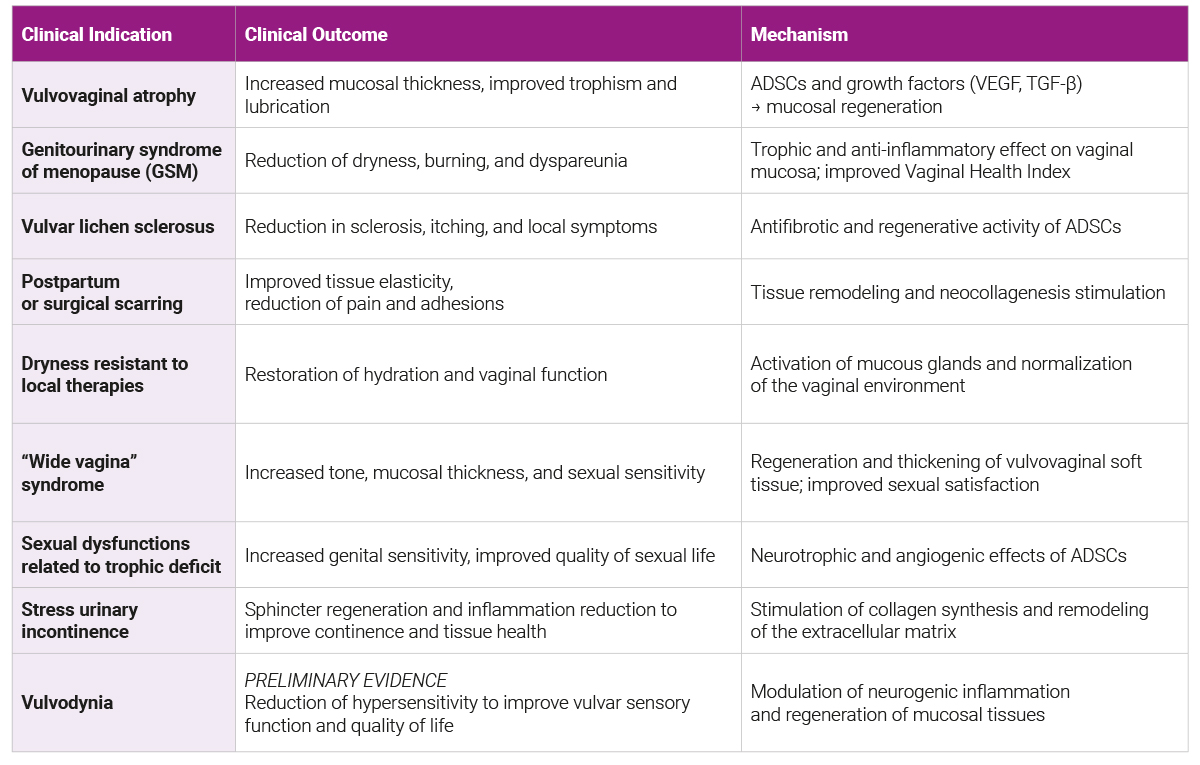
Vulvo-vaginal atrophy (postmenopausal and non-postmenopausal): → Treatment of thin, fragile, and hypoelastic mucosa, particularly at the level of the vaginal introitus; improves hydration, trophism, and tissue elasticity. Neoangiogenic effect. Vulvar lichen sclerosus: → Reduction of scar sclerosis and chronic itching through regeneration of connective tissue. Neoangiogenic effect. Scars and post-surgical outcomes: → Treatment of adhesions and fibrosis following episiotomy, Bartholin’s cysts, abscess incisions, and oncological procedures; improvement of local elasticity and sensitivity. Neoangiogenic effect. Vaginal dryness resistant to local therapies (including in reproductive age): → Restoration of the vaginal microenvironment and improvement of physiological lubrication. Neoangiogenic effect. Sexual dysfunctions related to tissue deficits (pain, hyposensitivity, loss of tone): → Sensory recovery, increased coital comfort, and improvement in sexual quality of life. Neoangiogenic effect. “Wide vagina” syndrome: → Enhancement of tone, mucosal thickness, and tissue support in the absence of pain but with reduced coital sensitivity. Neoangiogenic effect. Mild-to-moderate stress urinary incontinence: → Trophic support to periurethral tissues, improvement in tone and continence. Neoangiogenic effect.
Role of mesenchymal Stem Cells (ADSCS) inGinecology
Adipose-derived mesenchymal stem cells (ADSCs) play a central role in gynecologic regenerative therapies due to their ability to:
Vaginal mucosa: → ADSCs help restore mucosal trophism, hydration, and thickness, improving conditions such as vulvovaginal atrophy and persistent dryness. Perineal and vulvar tissues: → They promote tissue repair in cases of post-episiotomy scars, lacerations, or vulvar surgery outcomes. Chronically inflamed vulvar tissues (e.g., lichen sclerosus): → ADSCs reduce inflammation and fibrosis, improving local elasticity and comfort.
Urogenital area (urethra/periurethral tissues): → They support connective tissue regeneration and tone improvement in mild to moderate stress urinary incontinence.
Clinical effects
Anti-inflammatory Effect → ADSCs reduce chronic inflammation in vulvovaginal tissues through the secretion of anti-inflammatory cytokines (IL-10, TGF-β). → Decreased swelling, itching, and local pain. → Improvement of symptoms in chronic inflammatory conditions such as lichen sclerosus. Regenerative Effect They stimulate regeneration of fibroblasts, keratinocytes, and endothelial cells. → Restoration of mucosal structure and elasticity. → Improved quality of atrophic or scarred tissues. → Restoration of microcirculation and tissue trophism. Analgesic Effect Their combined anti-inflammatory and trophic actions reduce pain, especially in cases of vaginal dryness, postpartum or surgical scarring, and lichen. → Reduced need for topical anesthetics or local hormonal therapies. Immunomodulatory Effect ADSCs modulate the local immune response, attenuating autoimmune and fibrotic processes. → Useful in chronic immune-mediated vulvar diseases.
Functional Improvement and Quality of Life → Increased lubrication, elasticity, and tissue sensitivity. → Enhanced comfort during sexual intercourse and overall uro-genital wellbeing.
ClinicalApplicationsof Intragraft Fat® in Gynecology